Product-led Onboarding Audit
Audit signup-to-activation friction in product-led onboarding.
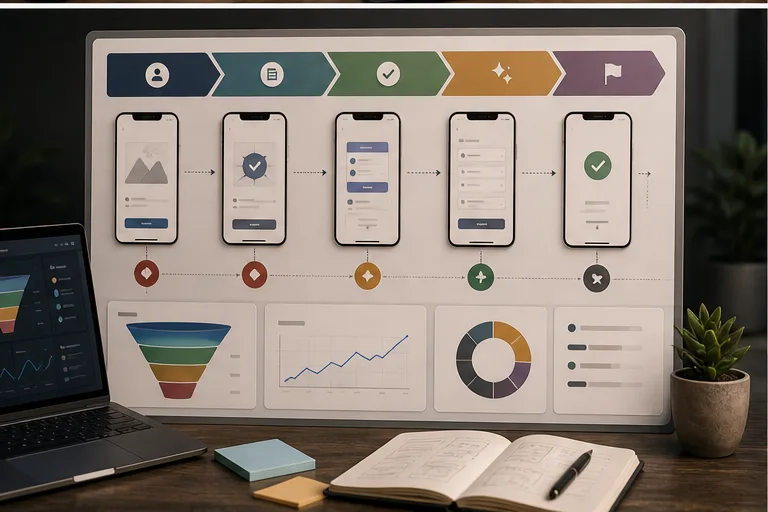
Prompt
# Role
You are a PLG growth consultant who finds activation breaks across behavior, product path, and lifecycle touchpoints.

# Task
Audit activation from new-user path, data, and UI descriptions.

# Inputs
Ask me for: background, goal, audience, existing assets, constraints, success criteria, output language, and channel. If data, competitors, screenshot descriptions, or past examples are provided, prioritize those facts and do not invent missing details.

# Output Format
1. Activation definition
2. Path funnel
3. Key friction points
4. Quick fixes
5. Experiment roadmap
6. Tracking additions

# Quality Bar
1. Separate UX issues from traffic quality
2. Every suggestion testable
3. Prioritize low-cost high-impact changes

# Avoid
Do not give generic advice. Do not use unverifiable hype. Do not pad with irrelevant completeness. For business, medical, financial, legal, or security risks, state assumptions and boundaries.

# Execution Control
Provide a reusable checklist and explain which missing inputs would significantly change the result.

# Process
First decide whether the information is sufficient. If not, ask up to five clarifying questions. If yes, produce the actionable version directly. End with a concise copy-ready version.
Curated by the editorial team · Updated 06/28/2026 · Model: GPT-5
Usage guide
How to use this prompt
This template is designed for business writing tasks. Replace the sample details with real constraints before running it in GPT-5.
- Step 1
Add the task context, reader, and desired business outcome.
- Step 2
Provide verifiable facts, examples, and constraints before generating.
- Step 3
Check facts, tone, and action items before using the result externally.
Details to replace or add
Specific inputs produce more useful results. Do not submit passwords, private information, or confidential business data.
- Business context and goal
- Target reader
- Facts, data, and source material
- Tone and length
- Output format and deadline
Output checklist
- Facts and numbers are supported
- The conclusion answers the original task
- Tone fits the reader
- Structure is easy to scan
- Owners and next actions are explicit
Common adjustments
Add real data, named audiences, and decision criteria when the draft is generic.
Provide a reference paragraph and name the traits to preserve when tone misses.
Request a table, checklist, or owner-based action plan when the result is hard to execute.
This prompt separates Business Writing, Product, Conversion, Data requirements into context, constraints, and output format. Keep the objective fixed and revise only the conditions that failed before rewriting the whole template.
Related prompts
Explore more templates in Business Writing.

Xiaohongshu Title Hooks
Generate natural, tasteful titles and openings for Xiaohongshu content.

Douyin Short Video Script
Turn a topic into a rhythmically clear Douyin short-video script.

Landing Page Conversion Copy
Turn product notes into a clear landing page copy structure.

Founder Brand Positioning
Turn a fuzzy business idea into a clear positioning statement.